If you’re looking to address stubborn fat or contour your body without surgery, you’ve almost certainly come across both fat freezing and HIFU. They’re two of the most-searched non-surgical body treatments in the UK – and they’re often mentioned in the same breath. But they work in fundamentally different ways, target different concerns, and suit different candidates.
This isn’t a case of one being better than the other. It’s a case of which one fits what you’re actually trying to achieve. By the end of this guide, you’ll know the answer to that for your specific situation.
Quick Answer – At a Glance
| Fat Freezing (Cryolipolysis) | HIFU Body | |
|---|---|---|
| How it works | Controlled cooling destroys fat cells, eliminated by the lymphatic system | Focused ultrasound heats tissue at depth, breaks down fat cells and triggers collagen |
| Best for | Defined, pinchable fat pockets | Skin laxity, contouring, diffuse fat with loose skin |
| Treatment time | 45-60 min per area | 60-90 min depending on areas |
| Typical sessions | 1-3 per area | 1-2 per area |
| Downtime | None. Immediate return to normal activity. | None. Mild redness for a few hours. |
| Results timeline | 8-12 weeks post-treatment | 8-12 weeks, peak at 3 months |
| Results longevity | Permanent fat cell reduction (with stable weight) | 12-18 months; repeatable |
| Comfort | Cold and pressure during treatment; numbness. Most find it tolerable. | Warmth and tingling; can be more pronounced over bony areas. |
What Is Fat Freezing?
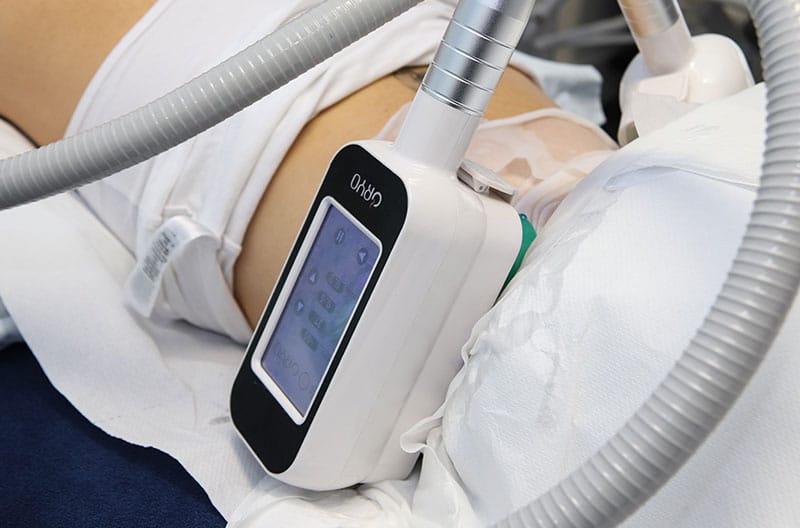
Fat freezing – clinically known as cryolipolysis – works by applying controlled, targeted cooling to a specific area of the body. The extreme cold damages the fat cells without harming the skin or surrounding tissue. The body then recognises those cells as damaged and processes them through the lymphatic system over the following 8-12 weeks. The fat cells are gone – permanently, provided weight remains stable.
Clinic 33 has been performing fat freezing in Brighton since 2013. It’s the treatment the clinic was built around, and it remains one of the most in-demand procedures offered. For clients wanting to explore this further, the treatment is also available under non-invasive liposuction – the same cryolipolysis approach, different entry point for those searching by that term.
Fat freezing is excellent at what it does. The important caveat: the area needs to have enough pinchable fat to be drawn into the applicator. It doesn’t work on flat or very diffuse fat, and it doesn’t address skin laxity.
What Is HIFU for the Body?
HIFU – High-Intensity Focused Ultrasound – delivers focused ultrasound energy to precise depths beneath the skin. At body depths (typically 8mm-13mm), the heat disrupts fat cells in the subcutaneous layer, which the body then eliminates naturally. Simultaneously, the energy triggers a collagen response in the overlying skin, gradually tightening it.
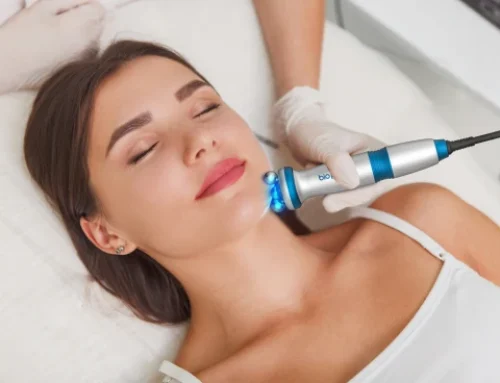
This dual action – fat disruption plus skin tightening – is what makes body HIFU particularly useful for areas where both concerns exist together. Clinic 33’s HIFU body contouring protocols address the abdomen, thighs, flanks, and upper arms. There’s also a facial application – HIFU facial treatment – which is a separate protocol for lifting and tightening the face and neck.
Which Treatment Is Right for Your Concern?
This is where most comparison articles fall short by framing the answer around the treatments rather than the concern. Here’s a more useful way to look at it:
Stubborn, pinchable fat – love handles, lower belly, inner thighs, bra fat:
- Fat freezing. Defined pockets with enough volume to treat are exactly what cryolipolysis is designed for.
- Skin laxity – loose or crepey skin on the abdomen, arms, or thighs:
- HIFU body. Fat freezing doesn’t address skin quality. HIFU does – it’s the only non-invasive treatment that reaches the depth needed to stimulate meaningful collagen production here.
Loose skin after weight loss:
- HIFU body. The fat reduction work is largely done. What remains is a skin-tightening challenge, which HIFU addresses directly.
- Larger area needing overall reduction and contouring:
- HIFU body, or a combination of both. HIFU covers larger surface areas in a single session more efficiently.
Permanent fat cell reduction is the priority:
- Fat freezing. The fat cells eliminated by cryolipolysis don’t regenerate. HIFU’s fat disruption effect is meaningful but less targeted for pure volume reduction.
Diffuse fat with some skin looseness – a common post-pregnancy abdominal concern:
Both, in sequence. Fat freezing first to reduce volume, HIFU to address the overlying skin. Many Clinic 33 clients follow this combined approach.
How They Compare on Sessions, Downtime, and Experience
Both treatments are non-invasive with no required recovery period – you can return to normal activity the same day. That’s where the practical similarities mostly end.
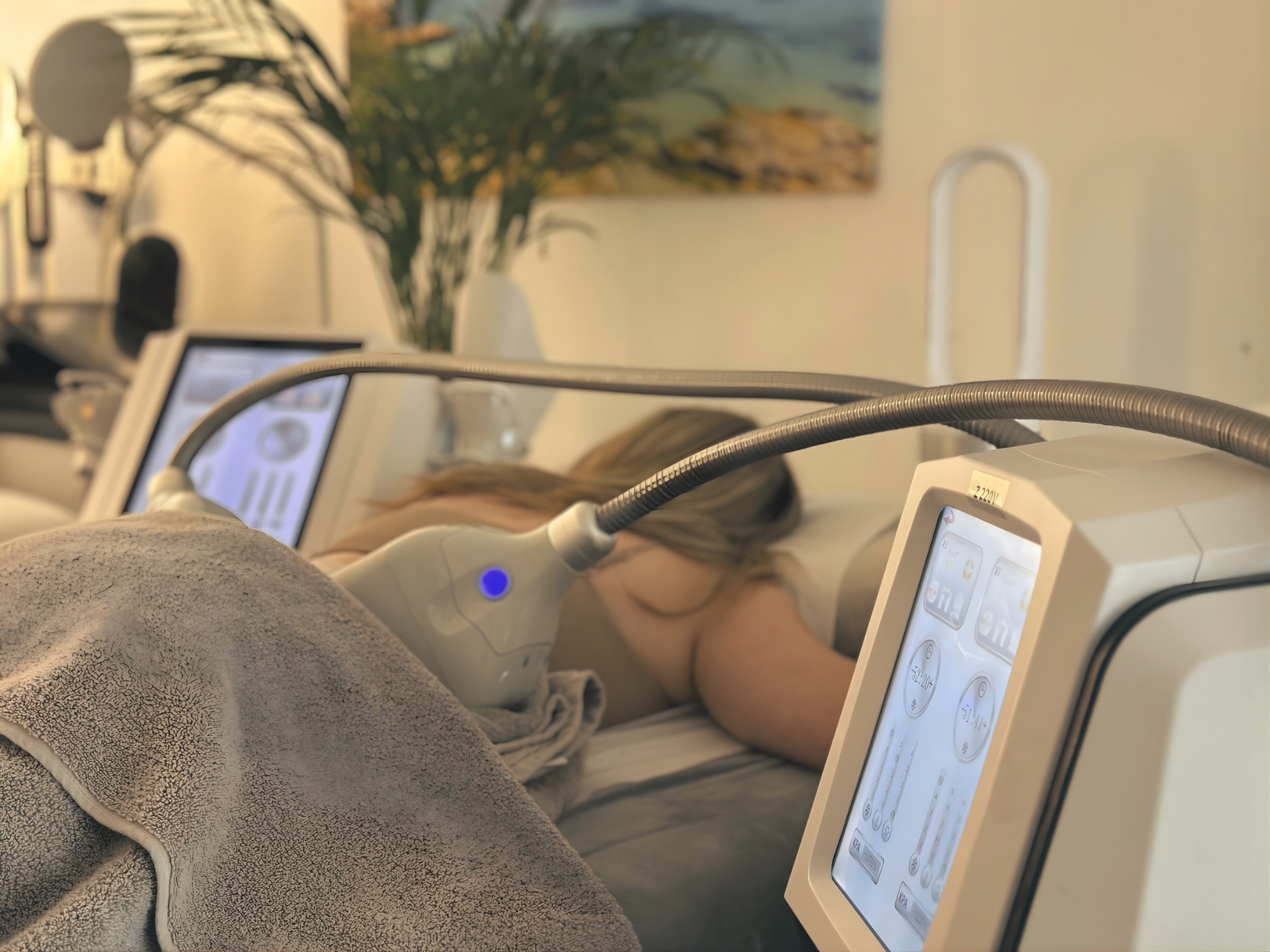
Fat freezing uses applicators that draw the tissue into a cup using suction, then cool it to the target temperature. During treatment, you’ll feel intense cold and pressure; the area typically goes numb within a few minutes. Afterwards, there may be redness, temporary numbness, and mild sensitivity. Some clients experience a brief aching in the treated area as sensation returns.
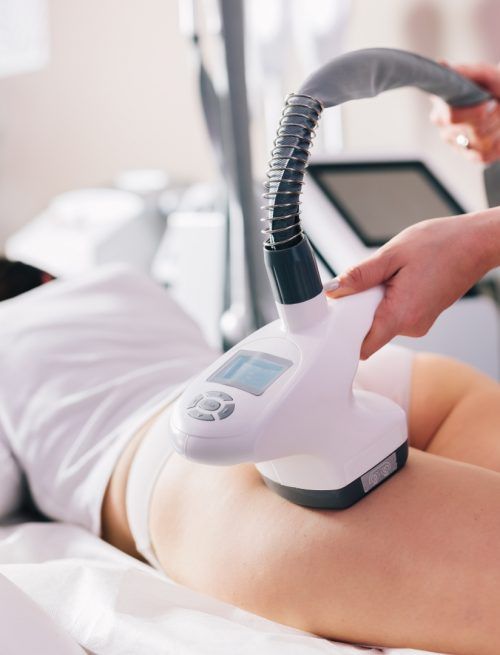
HIFU uses a handheld device moved across the skin. The sensation is warmth and a prickling feeling during each pulse – more noticeable over areas with less padding. There’s no suction. Post-treatment redness typically fades within hours.
In terms of sessions, fat freezing often achieves good results in one session per area, with a second pass considered at the 12-week mark if needed. HIFU body treatment is typically a single session with a follow-up at 6-12 months to maintain results.
For current pricing on both treatments, see the Clinic 33 pricing page.
Can You Have Both Treatments?
Yes – and for the right candidate, combining them produces a more comprehensive result than either treatment alone.
The logic is straightforward: fat freezing is highly effective at reducing the volume of stubborn fat deposits, but it doesn’t improve the skin above them. HIFU addresses skin quality and tightening, but the fat reduction effect is secondary to the collagen stimulus. Used together – typically fat freezing first to address volume, then HIFU to tighten the overlying skin – the result is a more contoured, firmer appearance than either treatment delivers individually.
The abdomen and flanks are the most common areas where this combined approach is used. It’s particularly relevant where there’s both a volume concern and some skin looseness over the same area. Whether combining makes sense for a specific client depends on their anatomy and goals – which is exactly what the consultation is for.
Who Should Avoid Each Treatment?
Fat freezing is not suitable if you:
- Are pregnant or breastfeeding
- Have cryoglobulinemia, cold agglutinin disease, or paroxysmal cold haemoglobinuria
- Have open skin conditions, active lesions, or compromised skin in the treatment area
- Have a hernia or a history of hernia in the proposed treatment site
- Have poor circulation or Raynaud’s phenomenon
- Don’t have sufficient fat volume to be drawn into the applicator – effectiveness depends on adequate tissue
HIFU body treatment is not suitable if you:
- Are pregnant
- Have electronic or metal implants near the treatment area (including pacemakers)
- Have active keloid scarring in the area to be treated
- Are undergoing active cancer treatment in or near the treatment site
- Have open lesions or severe active skin conditions in the treatment zone
Both treatments are assessed at consultation. If a contraindication applies, Clinic 33 will tell you directly rather than proceed with a workaround.
How Clinic 33 Helps You Choose
Clinic 33 doesn’t operate on a fixed menu – the treatment recommended is the one that fits the individual’s anatomy and concern, not the one that happens to be available on the day. That means the consultation comes before the booking, every time.
For body treatments, the clinic uses an InBody 270 assessment – a body composition analysis that measures muscle mass, fat distribution, and water retention. This gives a precise baseline before treatment begins and helps identify which approach is most appropriate for the client’s specific concern. It also provides measurable data for tracking results.
The clinic offers both fat freezing and HIFU body – so there’s no commercial incentive to push one over the other. The recommendation will be based on your anatomy, your goals, and an honest assessment of what each treatment can realistically deliver for your situation.
Frequently Asked Questions
Is fat freezing or HIFU better for the stomach?
It depends on what’s happening in that area. If there’s a defined, pinchable fat pocket on the lower abdomen, fat freezing is typically the more targeted option. If there’s skin looseness – particularly common after pregnancy or significant weight loss – HIFU’s collagen-stimulating effect makes it more appropriate. Many clients benefit from both: fat freezing for volume, HIFU for the overlying skin.
Does HIFU reduce fat as well as fat freezing?
HIFU does disrupt fat cells at body depths, and many clients see a reduction in fatty tissue alongside improved skin tightness. However, fat freezing is generally considered the stronger option where pure fat reduction is the primary goal, because cryolipolysis is specifically designed to target and permanently eliminate fat cells. HIFU’s fat disruption is a secondary benefit alongside its main collagen-stimulating action.
How long do fat freezing results last compared to HIFU?
Fat freezing results are considered permanent in terms of fat cell reduction – the cells destroyed by cryolipolysis don’t regenerate. Weight gain can affect the remaining fat cells, but the treated cells are gone. HIFU body results typically last 12-18 months before a maintenance session is beneficial, as the collagen-stimulating effect naturally diminishes over time as the skin continues to age.
Which treatment is more uncomfortable?
Both are tolerable for most clients. Fat freezing involves intense cold and suction pressure at the start – many find the first few minutes the most challenging, after which the area numbs. HIFU involves warmth and a prickling sensation during pulses, which is more consistent throughout but generally less intense. Individual pain tolerance varies, and your practitioner can adjust the approach to manage comfort.
How quickly will I see results from each treatment?
Both treatments produce gradual results as the body processes the treated tissue. For fat freezing, most clients begin noticing changes at 6-8 weeks, with full results visible at 12 weeks. For HIFU bodies, visible changes typically start at 4-6 weeks, with full collagen remodeling complete at around 3 months.
The Bottom Line
For stubborn, defined fat pockets – fat freezing. For skin laxity and contouring – HIFU body. For both concerns in the same area, consider combining them in sequence.
Neither treatment is better in the abstract. The right one is the one that matches your specific concern, anatomy, and what you’re realistically looking to achieve. That’s a conversation worth having before spending anything.
Still not sure which treatment is right for you?
Book a free consultation at Clinic 33 – we’ll assess your specific concern and recommend the treatment that genuinely fits, not the one we’re trying to sell.