
EMS Muscle Toning Explained: How It Works and What Results to Expect
EMS muscle toning is one of those treatments that sounds almost too straightforward to be credible. Electrical impulses trigger muscle contractions, and the result is improved tone and definition without lifting a weight. Whether that scepticism is fair, and what electrical muscle stimulation can and cannot actually achieve, is exactly what this guide covers. EMS has decades of use in physiotherapy and sports rehabilitation behind it, and its application in aesthetic muscle toning is a direct extension of that established history.
What EMS Is and How It Works
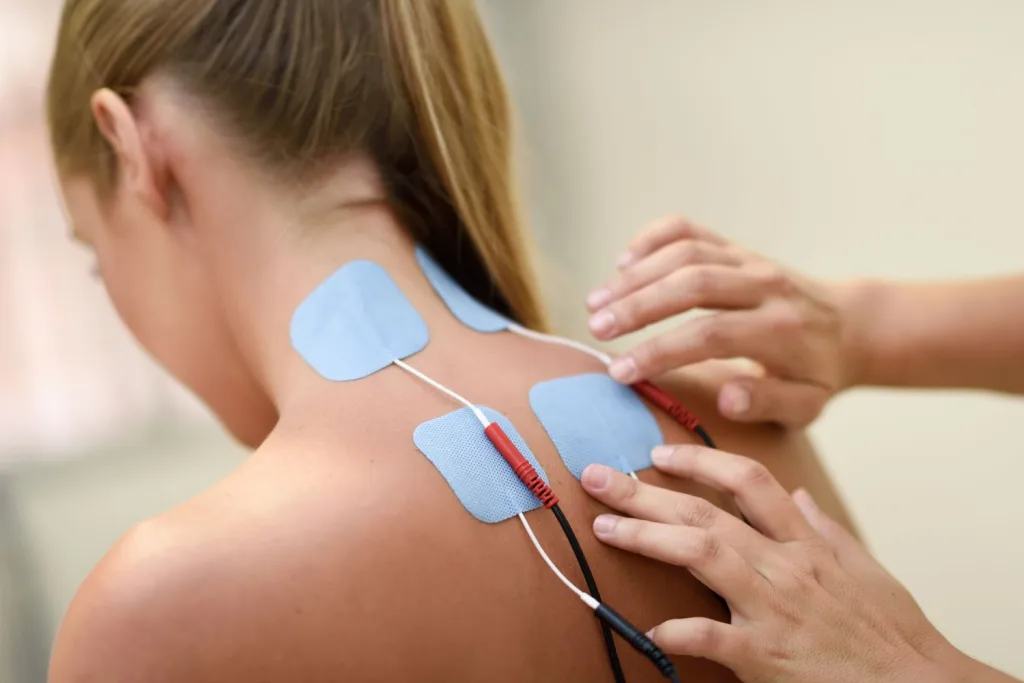
Electrical muscle stimulation works by delivering controlled electrical impulses to the motor nerves that activate your muscles. Those impulses trigger involuntary contractions, meaning the muscle is made to work without any voluntary signal from your brain or nervous system.
In a standard gym session, your brain sends a signal down the motor pathway, the nerve fires and the muscle contracts. Voluntary training is limited by how long you can sustain that signal before fatigue sets in. EMS bypasses that pathway entirely and drives the muscle directly, which is why it can produce a significantly higher number of contractions per session than voluntary exercise alone.
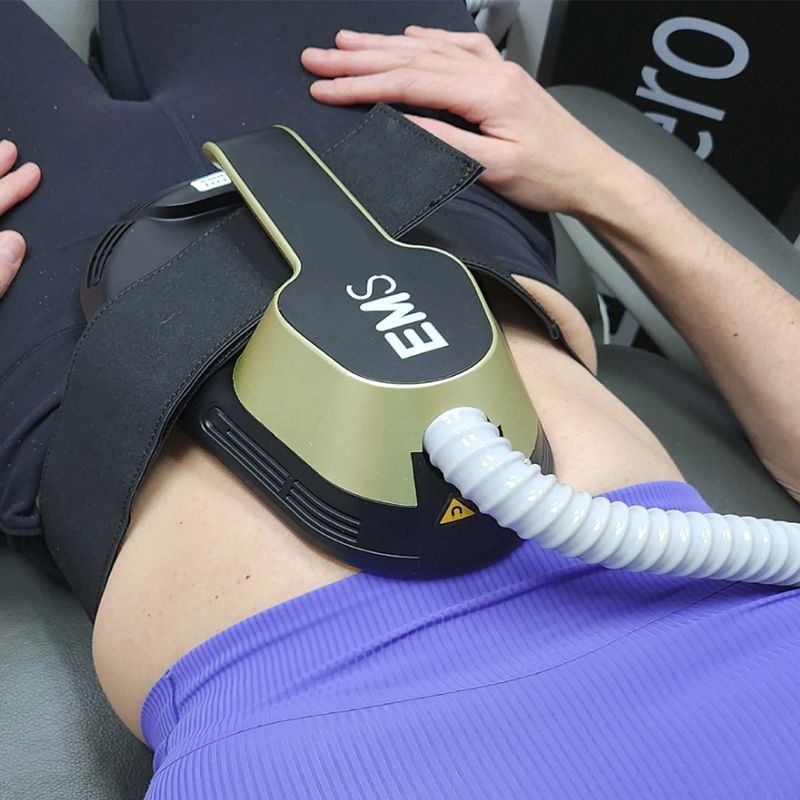
At Clinic 33, the EMS Max Pro system uses High-Intensity Focused Electromagnetic (HIFEM) technology to deliver these impulses. During a session of around 30 minutes, the device induces thousands of supramaximal contractions in the targeted muscle group. That level of intensity is not achievable through voluntary effort alone. The muscle responds to that stimulus in the same way it responds to intensive training: by adapting and rebuilding stronger, denser fibres.
The outcome is an increase in muscle mass and tone in the treated area, without the cardiovascular and mechanical demands that conventional resistance training requires.
What EMS Can and Cannot Do
Being honest about this matters, because the claims around EMS treatments vary considerably in accuracy.
What EMS muscle toning does well:
- Builds lean muscle in the treated area: the supramaximal contractions stimulate genuine muscle fibre growth, not just a temporary pump or circulation change. Many clients see measurable increases in muscle mass after a course of treatment.
- Improves definition and firmness: visible improvement in tone and shape is commonly reported in areas such as the abdomen, glutes, thighs and arms after a full course.
- Works muscle groups that are difficult to isolate: the deep core is particularly hard to fully engage through conventional exercise. EMS drives those fibres directly, which makes it popular for abdominal toning and post-partum core strengthening.
- Complements training: EMS does not replace exercise, but many people find it accelerates progress on muscle groups that are lagging, or helps maintain tone during periods of reduced activity.
What EMS does not do:
- It is not a fat-loss treatment: EMS targets muscle, not fat. Some localised metabolic activity occurs as the muscle works, but for meaningful fat reduction, treatments such as fat freezing or Lipofirm radiofrequency are more appropriate. The non-surgical body contouring guide covers the full range of options.
- It does not replace exercise overall: EMS tones specific muscle groups but does not deliver the cardiovascular, metabolic or bone-density benefits of regular training. It is a targeted tool, not a lifestyle replacement.
- It is not suitable for everyone: EMS is not appropriate during pregnancy, for anyone with a pacemaker or implanted electronic device, or for those with certain neurological conditions. Suitability is confirmed at consultation.
The most effective use of EMS is as a finishing layer: after fat reduction has addressed volume in a target area, EMS improves the muscle definition and firmness underneath. Knowing your starting point, specifically your muscle mass and fat distribution, makes that sequencing much clearer. The InBody 270 body composition assessment at Clinic 33 provides that baseline objectively, and pairs naturally with an EMS course.
What Results to Expect
After a full course of EMS treatment, many clients see a measurable and visible improvement in muscle tone and definition in the treated area. The change is not immediate: the muscle is rebuilding tissue in response to the stimulation, which takes time in the same way that gym-driven muscle growth does.
Most people begin to notice results from three to four weeks into a course. The full outcome typically becomes apparent at the six to eight week mark after the final session, as the muscle continues to remodel. Results generally last six months or longer, and maintenance sessions extend that further.
Factors that influence how pronounced the result is include starting muscle mass and tone, overall activity level, nutrition and consistency of maintenance sessions. For those who want to track progress objectively rather than relying on the mirror, the InBody 270 assessment measures muscle mass changes across a course of treatment and provides a clear picture of what has changed.
Who EMS Muscle Toning Suits
EMS is a good fit for people who are already reasonably active but want to improve definition or tone in a specific area that is not responding to training. It also suits those who have completed fat reduction treatment and want to improve muscle definition in the same area, and people rebuilding core strength after pregnancy or a period of reduced activity.
EMS works best for people who are at or close to a healthy weight with reasonable overall fitness. It is not designed for those significantly above a healthy weight hoping to use it for general body transformation; in those cases, a different starting point produces better outcomes, and the Clinic 33 team is straightforward about that at consultation.
For people who want to combine muscle toning with fat reduction in the same area, a combined course that sequences fat freezing first and EMS after tends to produce the most comprehensive result. Understanding your muscle-to-fat ratio before starting, through an InBody assessment, helps plan that sequence effectively. You can read more about what those numbers mean in the body composition guide.
EMS Muscle Toning at Clinic 33
At Clinic 33, EMS is delivered using the EMS Max Pro system, which uses HIFEM technology to produce the supramaximal contractions that drive muscle adaptation. Common treatment areas include the abdomen, glutes, thighs, arms and calves. Sessions take around 30 minutes per area, require no preparation and have no recovery period. You can return to normal activity immediately after.
Every course starts with a consultation to confirm suitability, agree the treatment areas and set realistic expectations for what the course will achieve. Where relevant, the InBody 270 assessment establishes a muscle mass baseline before treatment begins and tracks change across the course. Full treatment details are on the EMS Max service page. Client results are on the results page.
EMS Muscle Toning FAQs
-
Does EMS actually build muscle?
Yes. The HIFEM technology used in EMS Max Pro produces supramaximal muscle contractions that stimulate genuine muscle fibre growth and adaptation. This is the same biological process that drives muscle building through conventional resistance training, driven at an intensity that voluntary exercise cannot match. Clinical studies on HIFEM-based devices show measurable increases in muscle mass in treated areas after a course of treatment. Many clients at Clinic 33 see visible improvements in tone and definition after completing a course.
-
Is EMS a replacement for the gym?
No. EMS targets specific muscle groups in isolation and does not deliver the full-body metabolic, cardiovascular and bone-density benefits of regular exercise. What it does is drive a level of muscle contraction that is very difficult to achieve voluntarily, which makes it effective as a supplement to training rather than a replacement for it. For people who already train, EMS tends to accelerate results in targeted areas. For people who do not, it improves localised tone but does not address overall fitness.
-
How many EMS sessions will I need?
A typical course at Clinic 33 is six sessions, spaced two to three days apart to allow adequate muscle recovery between treatments, which equates to roughly a three-week course. Many clients notice initial change from week two or three. The full result becomes apparent at the six to eight week mark after completing the course. Maintenance sessions every six to eight weeks extend and build on results over time.
-
Does EMS help with fat loss?
EMS is not primarily a fat-loss treatment. Its mechanism targets muscle, not fat, and the metabolic effect of the muscle work during a session is relatively modest compared with dedicated fat-reduction treatments. For people looking to reduce fat alongside improving muscle tone, a combined approach using fat freezing or Lipofirm radiofrequency first, followed by EMS to finish, tends to produce the most comprehensive result. The Clinic 33 team can advise on the best sequence for your goals at consultation.