Which Cellulite Treatments Actually Work? An Honest Comparison
Do Cellulite Treatments Work? The Honest Answer
Here is the truth: no treatment removes cellulite permanently. Cellulite affects around nine in ten women at some point, regardless of weight, fitness level or lifestyle – it is a structural feature of female skin, not a health problem or a failure. But several treatments do genuinely reduce its appearance, sometimes significantly and for months or years at a time. The question is not “does cellulite treatment work” in the abstract. It is which treatments have real evidence behind them, what improvement is realistic, and which are worth your time and money.
This guide covers all of it honestly – including what does not work, what partially works, and where the meaningful results actually come from.
Why Cellulite Forms – and Why Surface Treatments Disappoint
Cellulite is caused by fat cells pushing up through a network of fibrous connective tissue bands (called septae) that run between the skin and the underlying muscle. In women, these bands run vertically, which means fat can protrude upward through them and create the characteristic dimpled texture. In men, the bands run diagonally, which is why cellulite is far less common in male skin.
Three factors drive how visible cellulite is: the thickness and structure of those fibrous bands, the amount and distribution of the fat beneath them, and the thickness and quality of the skin above. Hormones, genetics and age all influence all three. That structural origin is also why most surface-level products disappoint – they treat the outermost layer of skin without reaching the septae or the fat below them.
For a deeper look at cellulite in specific areas, see the clinic’s guides to cellulite on the back of legs and inner knee fat and skin texture.
What Does Not Really Work
Anti-cellulite creams
The market for cellulite creams is enormous and the evidence for most of them is thin. Caffeine-based formulas cause a mild, temporary tightening by dehydrating tissue slightly – which can make skin look marginally smoother for a few hours, but does not change the structure underneath. Retinol creams used consistently over months may thicken the skin slightly, which can make cellulite less visible, but the effect is modest. No topical product penetrates deeply enough to affect the fibrous bands or the fat layer that drive dimpling.
Verdict: minimal, temporary benefit at best. Not worth significant investment on their own.
Dry brushing
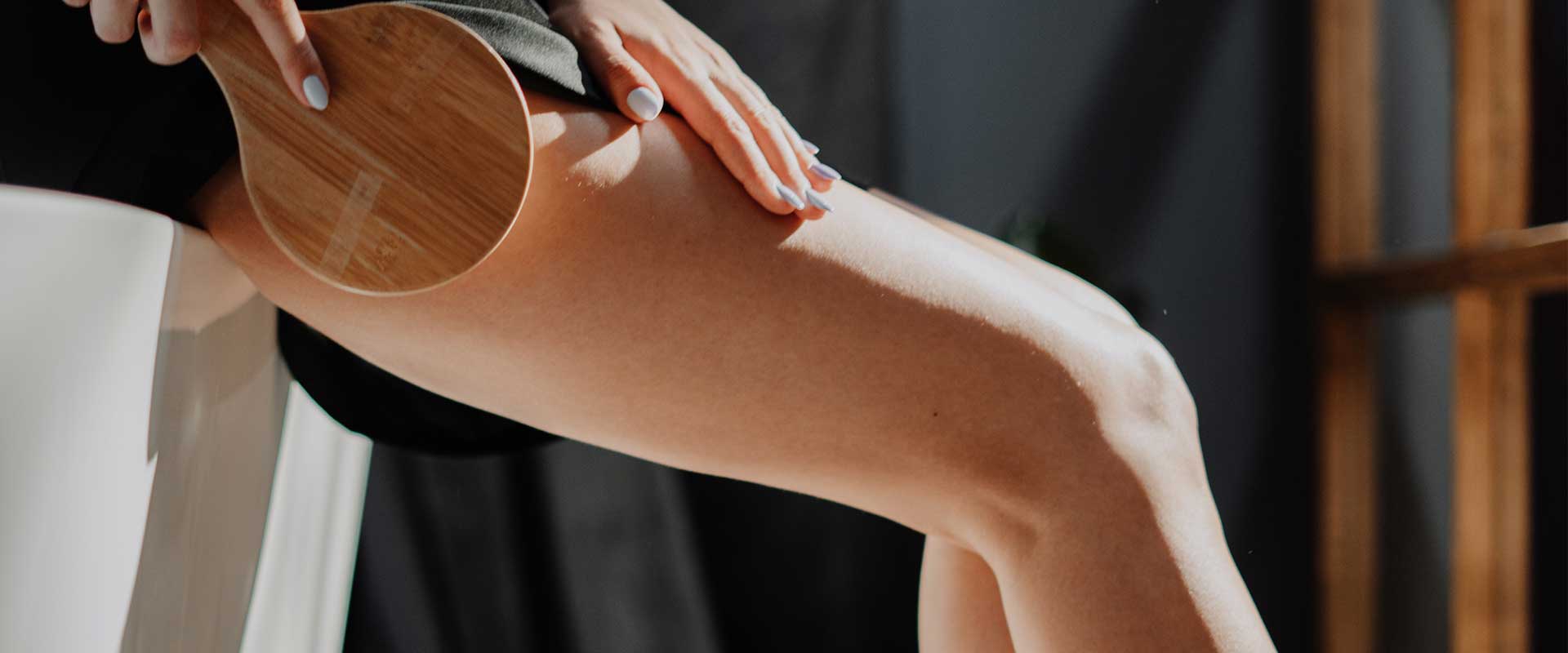
Dry brushing improves surface circulation and briefly stimulates lymphatic flow, which can make skin feel smoother and look slightly more even immediately after. The effect fades within hours. It has no structural impact on cellulite and no clinical evidence of lasting improvement. As a circulation-boosting daily habit alongside treatment, it is harmless. As a standalone solution, it will not move the needle.
Body wraps and quick fixes
Salon body wraps produce temporary results through compression and mild dehydration of superficial tissue. Any visible improvement is gone within 24 to 48 hours. They are not a cellulite treatment; they are a temporary finishing technique.
What Actually Helps at Home
Exercise and strength training genuinely contribute to cellulite reduction – not because they target fat in specific areas (spot reduction is a myth), but because building muscle beneath the skin creates a firmer underlying surface that makes dimpling less visible. Compound exercises that work the legs and glutes are particularly relevant.
Hydration, a diet that supports skin collagen production, and avoiding smoking all help maintain skin thickness and quality over time – which, as noted above, is one of the three structural factors that determine how visible cellulite appears.
These lifestyle factors produce real but modest results over months. They also support and prolong the effects of professional treatment, which is where more meaningful change becomes possible.
Professional Cellulite Treatments: An Honest Comparison
At a glance:
- Lipofirm RF + DMA – RF heat + muscle activation | Evidence: Strong | Sessions: 6-12
- HIFU (body) – Focused ultrasound, collagen rebuild | Evidence: Good | Sessions: 1-2
- Acoustic wave therapy – Sound waves break fibrous bands | Evidence: Moderate | Sessions: 6-12
- Manual lymphatic massage – Improves circulation and drainage | Evidence: Mild/temporary | Sessions: Ongoing
- Caffeine/retinol creams – Surface hydration and minor toning | Evidence: Weak | Sessions: Daily, limited effect
- Dry brushing – Circulation boost, skin smoothing | Evidence: Minimal | Sessions: Daily, temporary
Radiofrequency with Dynamic Muscle Activation (Lipofirm MED+)
This is the strongest evidence-based option for leg and body cellulite, and the treatment Clinic 33 uses as its primary approach. Lipofirm MED+ combines Tri-Polar radiofrequency energy with Dynamic Muscle Activation (DMA) in the same session. The RF component heats the dermis and subcutaneous fat layer, stimulating collagen remodelling and accelerating fat metabolism. The DMA component contracts the muscle beneath, simultaneously working on skin tightening and tone from below.
The combined effect addresses cellulite at multiple levels rather than one: fat reduction, fibrous band disruption, skin tightening and improved muscle definition in the treated area. Most clients notice visible improvement from the first session. A typical course for meaningful, lasting results is six to twelve sessions, with the area and severity of cellulite determining the recommendation.
It works on the front and back of the legs (quadriceps, hamstrings), glutes and bum. The treatment is not painful – there may be some mild bruising in the days following treatment on the backs of the legs, and a rest from resistance training on treated legs for 48 hours is advised.
Learn more about Lipofirm cellulite treatment at Clinic 33.
HIFU for Body Skin Tightening
High-Intensity Focused Ultrasound (HIFU) works at greater depth than radiofrequency, targeting the skin’s structural layers and the fat beneath to stimulate collagen and produce a tightening effect. For cellulite, it is most useful when skin laxity is the primary concern alongside surface texture – the skin above the dimpled area is loose as well as uneven. HIFU tightens from depth in a way that complements the surface-level work of RF treatment.
Results build over two to three months and can last twelve to eighteen months. It is often used alongside fat freezing (cryolipolysis) or Lipofirm as part of a combined approach rather than as a standalone cellulite treatment.
Acoustic Wave Therapy
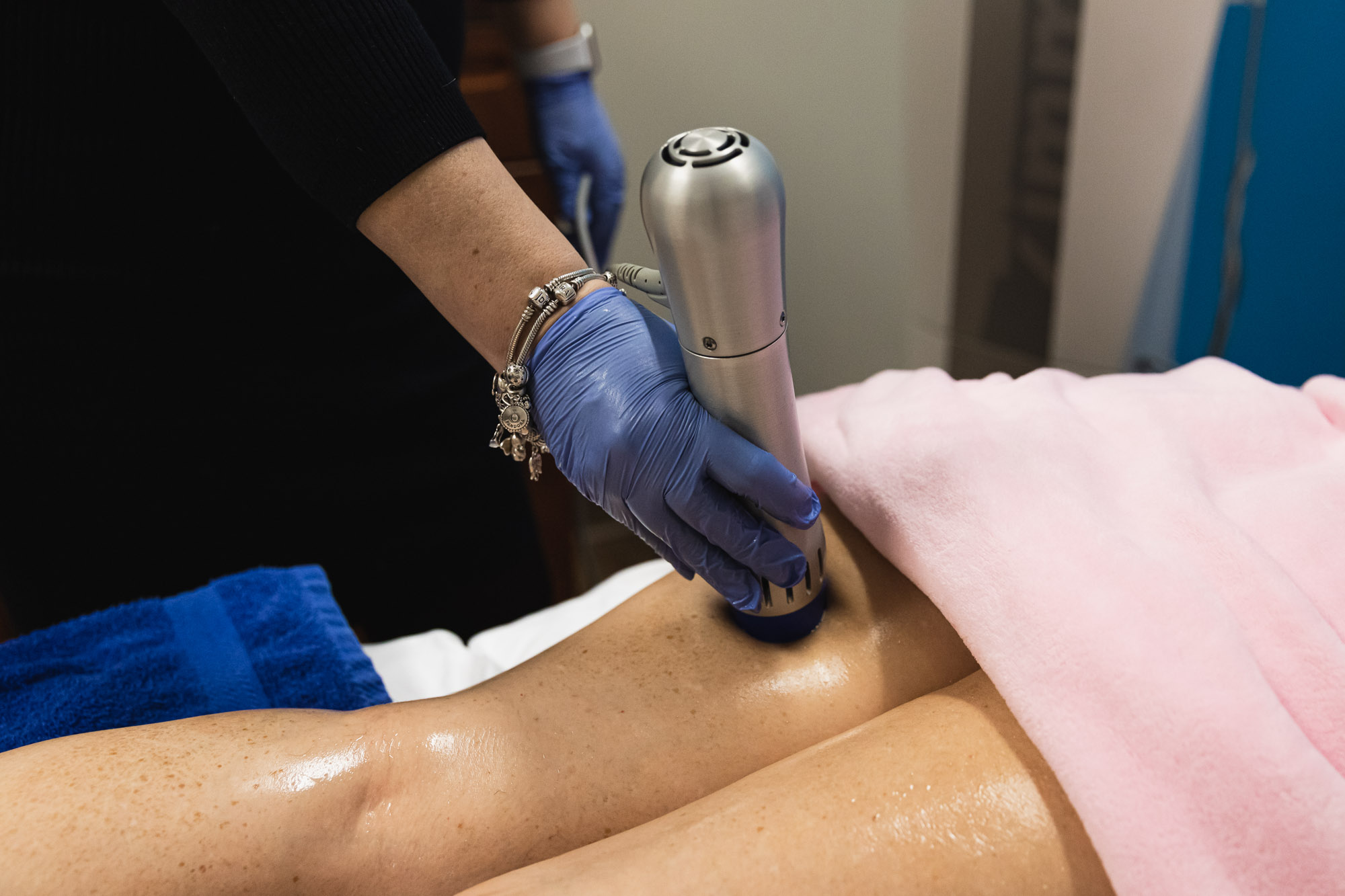
Acoustic wave therapy uses radial sound wave pulses to physically break down the fibrous septae that cause dimpling, while also improving circulation and lymphatic drainage in the treated area. It has a reasonable evidence base for cellulite specifically – studies show meaningful improvement in skin texture and the depth of dimpling after a course of treatment.
It is generally used as part of a combined approach alongside radiofrequency or lymphatic drainage rather than as a standalone.
Manual Lymphatic Drainage
Massage-based lymphatic drainage techniques improve circulation and encourage the body to flush excess fluid from the treated area, which can temporarily reduce the puffiness that makes cellulite more visible. The results are real but short-lived – they are most useful as a preparation for or support to other treatments, not as a primary cellulite intervention on their own.
Questions to Ask Any Clinic Before Booking
The cellulite treatment market includes a wide range of providers and machines, and the quality of outcomes varies significantly. Before committing to a course of treatment, it is worth asking:
- What technology does the machine use, and what specific evidence supports it for cellulite rather than skin tightening generally?
- How many sessions are included in the package, and what results should I realistically expect from that number?
- Can I see before and after photos from your clients specifically, taken at the same stage of treatment?
- What is the cost per session versus the course cost, and is a maintenance plan included?
- Who will be delivering the treatment, and what training do they have on this specific equipment?
Clinics that give realistic, specific answers to these questions – including honest limits on what improvement is achievable – are the ones most likely to deliver results worth paying for. Broad promises about “eliminating” cellulite are a warning sign rather than a selling point. For a broader overview of treatment options for body reshaping, the non-surgical body contouring guide covers the full landscape.
Cellulite Treatment FAQs
How many sessions do I need for cellulite treatment?
For Lipofirm MED+ treatment at Clinic 33, the typical course is six to twelve sessions, depending on the severity of cellulite and the area being treated. Single sessions are also used as maintenance top-ups after a course has been completed. Improvement is cumulative – the treatment is regenerative, so results build progressively across the course rather than appearing fully after one session.
Is cellulite treatment painful?
Lipofirm MED+ treatment is not painful. Some clients notice mild discomfort on the backs of the legs and glutes where the pulse intensity is higher, but it is always kept within a tolerable range. The legs can feel slightly tender or bruised for two to three days after treatment on the hamstrings, which does not affect daily activity. There is no downtime.
How long do cellulite treatment results last?
After a full course of Lipofirm treatment, results typically hold for several months and can be extended with maintenance sessions. Maintaining a stable weight and keeping up exercise during and after treatment supports longer-lasting outcomes. Cellulite can gradually return over time as the underlying structural factors continue to be influenced by hormones and ageing, which is why top-up sessions are recommended.
Can I combine cellulite treatment with fat freezing?
Yes, and for clients with both significant fat and surface cellulite, a combined approach often produces better results than either treatment alone. Fat freezing reduces the underlying fat volume, which in turn reduces the pressure pushing through the fibrous bands. Lipofirm or HIFU then addresses the skin quality and texture above. The team at Clinic 33 will advise on the most effective sequence based on your specific concern.
Ready to find out which cellulite treatment is right for your skin?Book a free consultation at Clinic 33 – the team will assess your skin, discuss what is realistic for your specific concerns, and recommend a plan that gives you the best chance of meaningful results. View the cellulite treatment page for full details on the Lipofirm MED+ approach. |