HIFU has gone from a niche procedure discussed in specialist circles to one of the most-searched non-surgical treatments in the UK. If you’ve been seeing it mentioned and aren’t sure what it actually is, you’re not alone and the information online ranges from genuinely useful to wildly overstated.
This guide covers what HIFU is, how the technology works, which areas it can treat, what the safety record looks like, and how it honestly compares to a surgical facelift. If you’re considering a treatment, this is what you need to know before you book anything.
What Does HIFU Actually Stand For?
HIFU stands for High-Intensity Focused Ultrasound. It’s a non-invasive treatment that uses ultrasound energy focused into precise depths beneath the skin to stimulate collagen production and, in body treatments, to disrupt localised fat cells.
The technology isn’t new to medicine. HIFU has been used in clinical settings for decades, notably in the treatment of certain tumours, before aesthetic practitioners recognised that lower-intensity, controlled applications could produce meaningful lifting and tightening results without surgery. That medical background matters: this is an established technology being applied in an aesthetic context, not something developed purely for the beauty market.
How Does HIFU Work?
HIFU works by delivering focused ultrasound energy to specific depths beneath the skin surface without breaking the skin itself. The energy heats the targeted tissue typically to around 60–70°C for a fraction of a second, which triggers the body’s wound-healing response. That response produces new collagen and elastin, which gradually tightens and lifts the skin over the weeks that follow treatment.
For facial treatments, energy is typically delivered to three depths: 1.5mm (targeting the superficial dermis), 3mm (the deeper dermis), and 4.5mm (the SMAS layer, the same layer surgeons address in a facelift). Being able to reach the SMAS non-invasively is what separates HIFU from many other skin-tightening modalities.
For body contouring, cartridges that reach deeper typically 8mm to 13mm are used to disrupt the fat cells beneath the tissue, which the body then processes and eliminates naturally over the following weeks. The skin-tightening effect at the surface happens simultaneously.
Think of it like this: a magnifying glass focuses sunlight to a single point with enough intensity to generate heat, while the surrounding area remains unaffected. HIFU does something similar beneath the skin concentrated energy at a precise depth, leaving the tissue above and below untouched.
What Areas of the Face and Body Can HIFU Treat?
HIFU is versatile, which is part of why it’s become so popular. The main treatment areas are:
Face and neck:
- Jawline definition and jowl lifting
- Cheeks and mid-face
- Nasolabial folds (nose-to-mouth lines)
- Brow lifting
- Neck tightening
- Décolletage
Clinic 33’s HIFU facial treatment in Brighton & Hove addresses these areas with protocols tailored to the individual’s anatomy. A single session doesn’t use the same approach for everyone.
Body:
- Abdomen
- Inner and outer thighs
- Upper arms
- Flanks
Body HIFU targets both the underlying fat cells and the overlying skin so the aim is contouring alongside skin tightening, not simply fat reduction in isolation. See HIFU body contouring in Brighton for full details on the body protocol.
Is HIFU Safe?
Yes, HIFU has a well-established safety record when administered correctly by a trained practitioner on appropriate candidates.
During treatment, the focused energy bypasses the skin surface entirely, which means no cuts, no needles, and no open wounds. The surrounding tissue is not affected. Most people find the sensation manageable, a warm, prickling feeling in the areas being treated, which some describe as more intense over bony areas.
Common and expected after-effects include:
- Mild redness for a few hours post-treatment
- Slight swelling, typically resolving within 24–48 hours
- Temporary tenderness or sensitivity in the treated area
- Very occasionally, minor bruising or temporary numbness
These are short-lived and generally don’t require downtime. Most people return to normal activity immediately.
HIFU is not appropriate for everyone. You should not undergo HIFU if you have:
- Pregnancy
- Electronic or metal implants in or near the treatment area (including pacemakers)
- Active keloid scarring in the treatment area
- Active cancer or undergoing cancer treatment in the treatment area
- Open lesions or severe cystic acne in the treatment zone
A thorough consultation will identify any contraindications before a treatment plan is agreed upon. If HIFU isn’t the right fit, there are other options — Clinic 33 will tell you that plainly rather than proceed regardless.
HIFU vs a Surgical Facelift — What’s the Difference?
This is a question worth answering honestly, because the two are sometimes positioned as equivalent. They’re not.
| HIFU | Surgical Facelift | |
| Invasiveness | Non-invasive. No incisions, no anaesthesia. | Surgical. Incisions, general or local anaesthesia, and recovery period. |
| Downtime | None typically. Return to daily activities immediately. | Weeks of recovery. Bruising, swelling, and restricted activity. |
| Results | Gradual, natural-looking improvement over 8–12 weeks. | More dramatic, visible from weeks 6–8 post-surgery. |
| Longevity | Typically 12–18 months. Repeatable. | 5–10 years, depending on skin ageing. |
| Best suited to | Mild-to-moderate skin laxity. Early signs of ageing. Those wanting lift without surgery. | Significant skin laxity. More advanced signs of ageing. Those prepared for surgical risk and recovery. |
| Cost | Lower. Single session, no hospital fees. | Higher. Surgical fees, anaesthesia, and aftercare. |
If you’re looking for a non-surgical alternative that still delivers a meaningful lift, HIFU is worth considering. If you’re looking for the level of correction a surgical facelift delivers, HIFU isn’t going to replicate that, and a good practitioner will tell you so.
For clients who want a non-surgical approach to facial lifting, a non-surgical face lift using the Divine Pro may also be worth discussing alongside HIFU, depending on your anatomy and goals.
Who Is HIFU Right For — and Who Should Skip It?
HIFU tends to work best for:
- Adults typically in their 30s to 60s with mild-to-moderate skin laxity
- People who are beginning to notice sagging in the jawline, jowls, brow, or neck
- Those who want a gradual, natural-looking improvement rather than a sudden transformation
- Individuals who can’t or don’t want surgery but are looking for something more substantive than topical skincare
HIFU is less likely to be the right fit for:
- Significant or severe skin laxity, the technology can’t replicate the degree of correction that surgery achieves
- Anyone expecting immediate results, the improvement is gradual and reaches its peak at around 3 months
- Clients with the contraindications listed in the safety section above
Honest expectation-setting before treatment is the difference between a satisfied client and a disappointed one. If HIFU isn’t the right tool, there are others. The conversation at Clinic 33 starts with your anatomy and goals, not with what’s available to sell.
What to Expect From a HIFU Session at Clinic 33
Every treatment starts with a consultation. The practitioner will assess your skin, discuss your concerns and goals, and confirm whether HIFU is the appropriate option. Nothing is booked until that assessment is done and you’re comfortable.
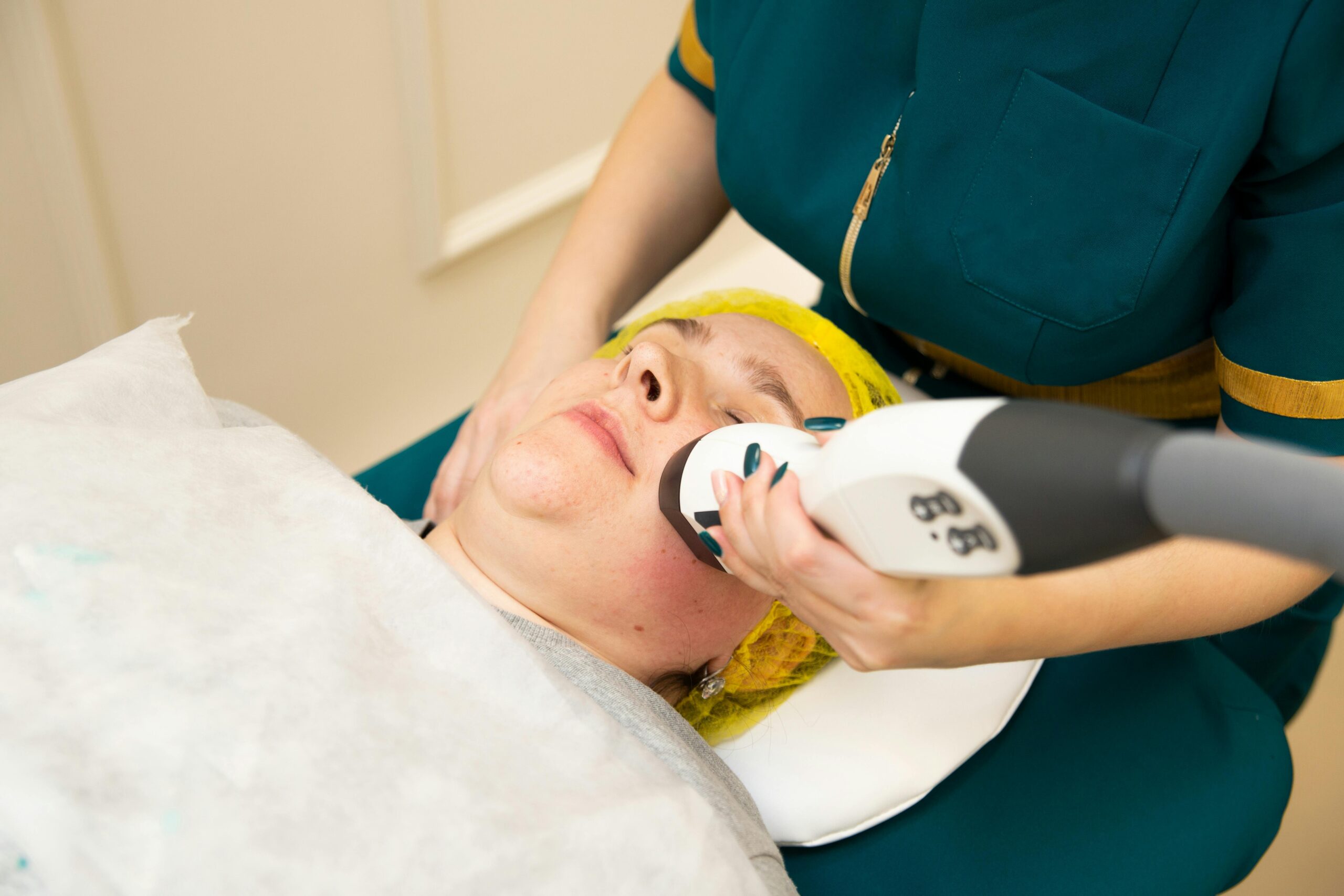
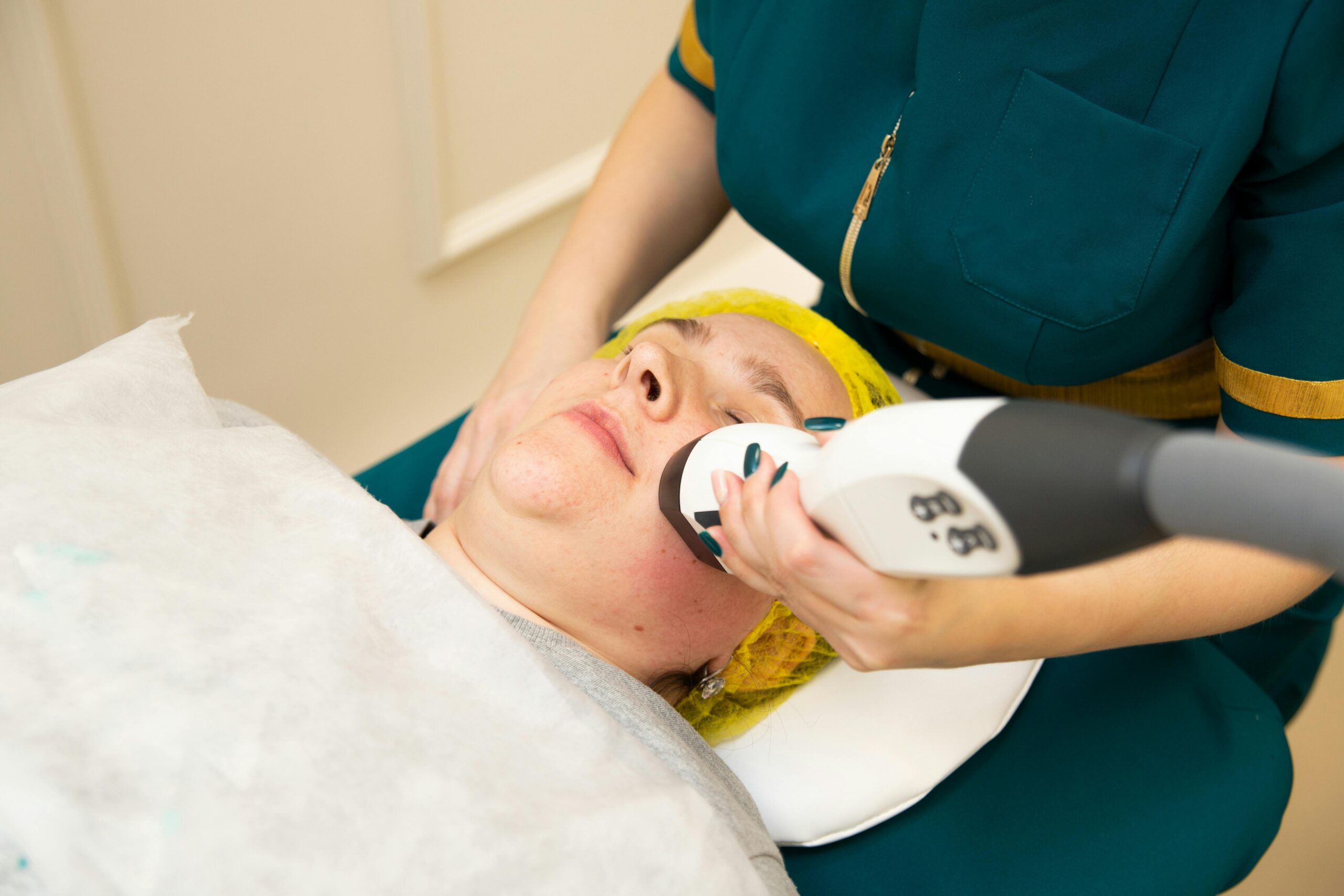
On the day of treatment, the skin is cleansed, and an ultrasound gel is applied to the area. The HIFU handpiece is moved across the skin in a systematic pattern, delivering pulses of focused energy. Facial treatments typically take 60–90 minutes, depending on the areas covered. Body treatments vary by area size.
Most people experience warmth and a prickling or tingling sensation during delivery. Sensitivity varies; bony areas can feel more pronounced. There’s no numbing required, though some practitioners offer a topical anaesthetic cream for clients who prefer it.
Post-treatment, you may notice mild redness or swelling for a few hours. That typically resolves the same day. You can apply makeup, return to work, and continue normal activities immediately.
Results appear gradually. Most clients notice initial changes at 4–6 weeks, with the full outcome visible at 3 months as collagen remodelling reaches its peak. Results generally last 12–18 months, after which a repeat session can maintain the improvement.
Frequently Asked Questions About HIFU
How long does a HIFU treatment take?
A full-face HIFU treatment typically takes 60–90 minutes. Body treatments vary depending on the size of the area being addressed — a focused abdominal session might take 45–60 minutes, while larger or multiple areas take longer. Your practitioner will give you a realistic time estimate at the consultation.
Does HIFU hurt?
Most people find HIFU tolerable rather than painful. The sensation is typically described as warmth, tingling, or a brief prickling feeling during each pulse. The intensity varies by area — bony prominences like the cheekbones or jawline can feel sharper. A topical anaesthetic cream can be applied beforehand if you’re concerned about comfort.
How soon will I see results from HIFU?
Some clients notice a subtle immediate tightening effect in the days following treatment, but the primary results develop gradually over 8–12 weeks as new collagen forms. Full results are typically visible at around 3 months post-treatment.
How long do HIFU results last?
Results typically last 12–18 months, though this varies depending on the individual’s skin, age, and rate of natural ageing. A maintenance session once a year or so can sustain the improvement. The treatment is cumulative — each session builds on the collagen stimulation from the last.
How much does HIFU cost in Brighton?
Pricing varies depending on the areas treated and the extent of the protocol. For current pricing at Clinic 33, visit the pricing page or request a personalised quote at your free consultation.
The Bottom Line
HIFU is a clinically sound, non-invasive treatment that uses focused ultrasound to stimulate collagen production and, in body applications, disrupt localised fat. It’s well-suited to clients with mild-to-moderate skin laxity who want meaningful improvement without surgery or downtime.
It won’t replicate the results of a surgical facelift, and it isn’t right for everyone. But for the right candidate, it delivers a genuine, gradual lift with minimal disruption to daily life — and that’s a meaningful option.
If you want to explore whether HIFU fits your goals, the most useful next step is a conversation.
Curious whether HIFU is right for you? At Clinic 33, we’ll assess your skin, walk you through the options honestly, and only recommend HIFU if it’s genuinely the right fit.